
USFans Size Guide: Resolve Conflicting Measurements Before Choosing
A size chart can contain several numbers without making the choice clear. One column may describe a body measurement, another a finished garment, and a recommendation may use only height and weight. A useful USFans size comparison starts by finding out what each number measures, then deciding which difference matters for the way you want to wear the item.
Start with the exact product and option. If you are considering a hooded layer, inspect the hoodie reference on USFans. The reference is a candidate to examine, not a measured sample or a fit recommendation from this guide.
Find out what the chart measures
Read the chart labels before choosing a size letter. A measurement around the chest is different from the width across a flat garment. A suggested body range is different again: it describes an intended wearer rather than the physical width of the top.
| What you see | What to clarify |
|---|---|
| A chest figure | Is it a body circumference, garment circumference or flat width? |
| A sleeve figure | Where does the measurement begin and end? |
| A length figure | Is it front length, back length or a defined shoulder-to-hem measure? |
| A recommended size | Which product, body information and fit preference support it? |
| A range rather than one number | Does it describe an adjustable part, stretch or a recommendation? |
Do not infer the answer from the size of the number alone. If the chart does not explain a decisive field, ask for clarification rather than comparing it with a differently defined measurement.
Choose a reference garment for the intended use
A top you like under a jacket can be a better comparison for that purpose than a loose sweatshirt you wear alone. Measure the reference garment using the same endpoints as the listing when those endpoints are explained. Record the units and avoid stretching the fabric unless the stated method calls for it.
Check more than one dimension. Matching the chest width does not ensure the sleeves or body length suit you. With a hoodie, also consider how you plan to use the hood and neckline with your other layers. Those preferences are questions to examine in the selected product, not features that a size letter confirms.
For trousers, use a suitable pair of trousers as the comparison rather than translating a successful top size into a bottom size. The clothing selection guides help keep the garment type and intended use together.
When two measurements point to different sizes
Imagine a hypothetical chart in which one option matches the length you prefer but is narrower than your reference garment. The next option provides more width but adds length you do not want. There is no universally correct answer hidden in the larger size.
Identify which difference would make the garment unsuitable. You might seek clarification about the measurement method, compare another model, or decide that neither option meets your requirement. Choosing a different candidate is a valid result of a size comparison.
Do not calculate an average of two size labels. Nor should you treat a seller's general recommendation as proof that conflicting dimensions no longer matter. Keep the question specific: which selected option and which measurement need clarification?
Keep the selected version attached to the chart
A familiar product name is not enough to justify borrowing another listing's chart. Check the source, version, option and any stated chart applicability. If two charts disagree, establish which one concerns the item you are about to request.
Use the product-links guide when a saved address opens a different item. A replacement should get its own comparison. Reusing the old chart would preserve the appearance of a decision while changing its basis.
For sets, establish what the purchase includes and whether the sizes of the pieces can be chosen separately. A suitable top does not answer the sizing question for the bottom. Footwear likewise requires its own model and sizing system; foot-length advice, insole length and an outsole measurement are not interchangeable.
Ask for the view that answers the remaining question
At the warehouse stage, check that any photograph belongs to the selected item. A readable size label identifies the label; it does not measure the garment. If a dimension is decisive, ask whether a suitable measurement can be provided and specify the endpoints you need.
A ruler photograph with the starting point outside the frame does not resolve the comparison. Neither does a clear ruler on a different item. The QC photo guide explains how to match an image to a visible question without treating it as a complete fit test.
This does not establish that every measurement request is available or free. Check the service offered for your actual item before relying on it.
The inspection description does not replace a measurement
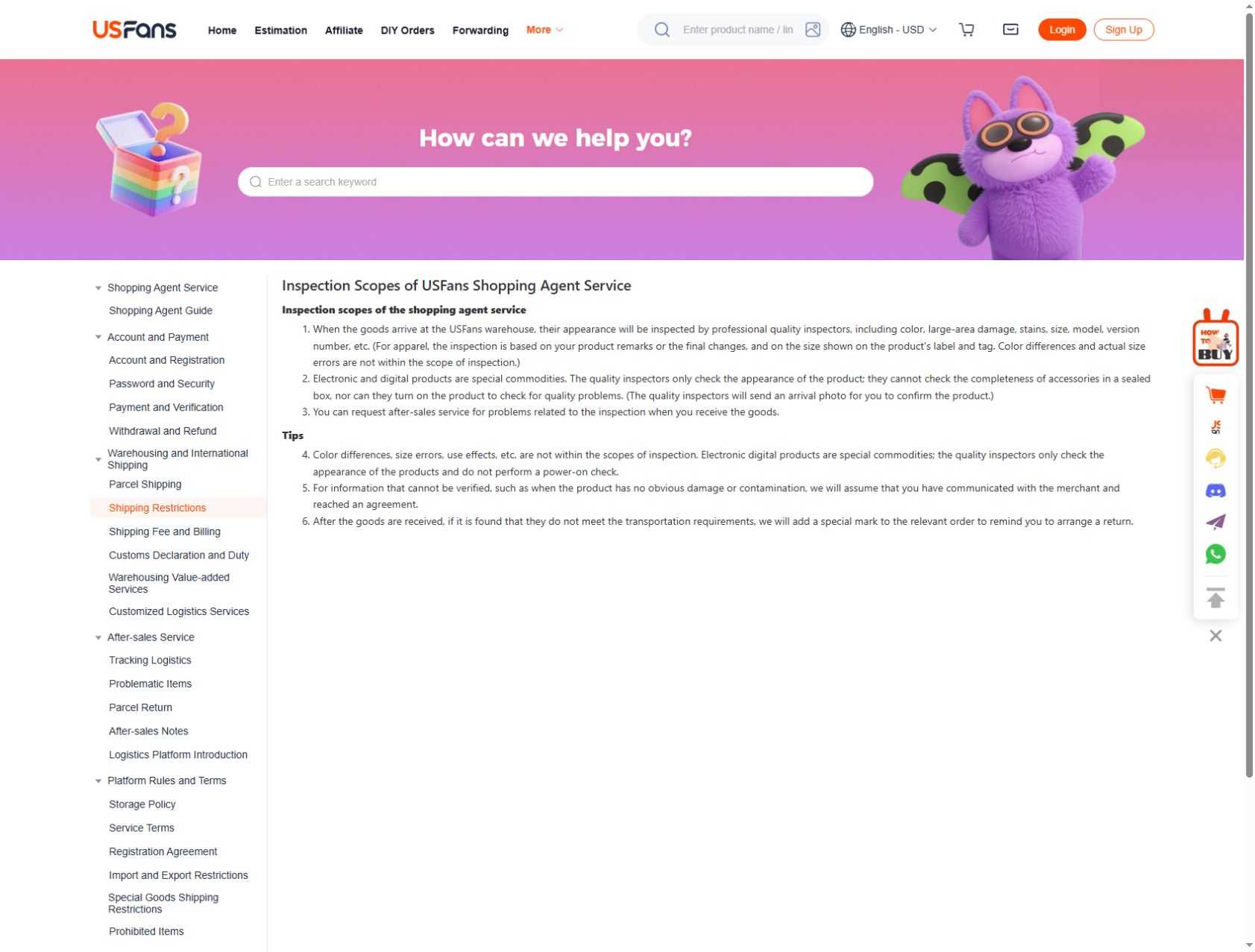
USFans' inspection description checked on 30 September 2026 separates the clothing-label check from actual dimensions and colour differences, which fall outside the stated inspection scope. A matching hoodie size label does not settle chest width or sleeve length. Keep those questions tied to a readable measurement of the selected garment.
Recheck before the next commitment
Before purchasing, compare the selected option with your notes. Before sending an item onward, consider any relevant inspection information and unresolved differences. The purchase guide connects these stages; the returns guide explains why an available remedy must be checked for the item and stage concerned.
Keep personal body information and private order details out of publicly shared comparisons. A concise product question usually needs the relevant dimension and method, not a complete account screenshot.
Common size questions
Should I always choose one size larger?
No. That rule cannot account for different charts, garment shapes or your intended fit. Compare the actual dimensions and decide which differences matter.
Can height and weight settle the choice?
They do not describe every body proportion or preferred fit. Treat a recommendation using them as distinct from a finished-garment measurement.
Does a matching measurement guarantee comfort?
No. A numerical match answers one comparison. Construction, shape and the way you intend to wear the item can still affect suitability.