
USFans Spreadsheet Links: Open the Right Item and Keep the Selected Option
A USFans spreadsheet link should help you reach the item you meant to inspect. A page loading successfully is only the first check: the product, selected option and included quantity still need to match the entry that brought you there.
Keep discovery separate from purchasing. The product buttons here open OG pages for browsing; they do not sign into your USFans account, transfer a selected variant or submit an order.
Start with the item, not the length of the link
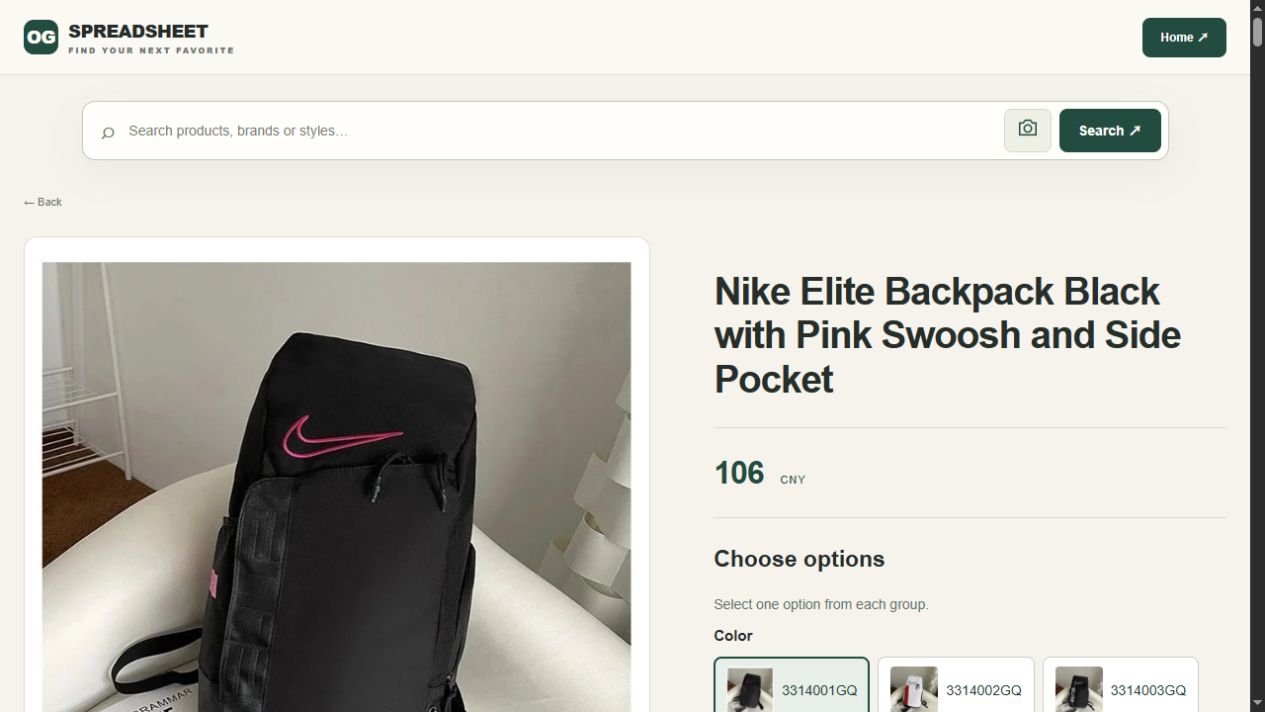
Read the row's description before opening its destination. Identify the item type and any selected colour, size or set configuration that made it worth considering. Once the page opens, compare those details with what is actually displayed.
For a concrete example, inspect this backpack on USFans. Use the destination to examine the bag and its available option information. Do not assume that a selection made elsewhere has followed you into the page.
A long address is not automatically wrong, and a short one is not automatically trustworthy. What matters is where it takes you and whether it represents the intended item without exposing private information.
Understand the result before choosing the next step
The expected product opens
Check the current selected option, not only the large gallery photograph. A listing can display several colours or versions while the option menu defaults to just one. Confirm quantity and included pieces separately if an image shows an outfit or group of items.
Use the size guide for measurement questions. A working link does not resolve an unclear chart or establish that a pictured accessory is included.
A category or search page opens
You are back at discovery rather than at a confirmed individual item. Search for the candidate again, then compare the new product details independently. Do not keep the old item's measurements or QC reference simply because the replacement photograph looks similar.
The best spreadsheet guide helps compare alternatives once you have identified them.
A login or error page opens
A login prompt is not confirmation that the original product remains available. Check the destination before entering account information and use the account-access guide for sign-in questions.
An error means the link did not provide the information you needed during that attempt. It does not by itself prove that the product is permanently gone or the whole platform is unavailable. Check the address and public page availability without repeating an order or payment.
Keep the option alongside a saved link
A saved product address may reopen without the size or colour you previously selected. Retain the option text and relevant measurements in your own shortlist so you can compare them when returning to the page.
If the option has disappeared, decide whether another option suits you as a new choice. Do not silently substitute it while preserving a conclusion about the old one. A different quantity, version or set composition can change both the price comparison and what you receive.
For an older reference, use the archive guide. The goal is to preserve why you chose the item, not to assume that a saved row prevents the listing from changing.
Reopen the backpack as a selection, not just an address
With the backpack example above, keep a short option note beside the public product link. On a later visit, compare the page with that note before relying on the earlier decision. The same address can be useful even when it does not restore your previous selection, but you still need to identify what is currently selected.
| What you saved | What to compare when reopening |
|---|---|
| Product address | The destination still shows the intended backpack rather than a category or another item |
| Option text | The current colour or version matches the choice you recorded |
| Included pieces | Any accessory or extra piece is part of that option, not merely visible in a gallery |
| Unanswered question | The current page supplies the missing detail, or the question remains open |
A sample note might say “backpack option recorded; included accessories not yet confirmed.” That is an example of a personal checklist, not a new finding about the linked product. Do not fill a missing detail from a similar photograph just to make the row look complete.
If the saved option is no longer available, retain the earlier note and compare the replacement separately. This avoids attaching the old selection's measurements or price observation to a different version. The archive guide is useful when the reference itself is old; the buying guide covers the next stage once you have a selection you can identify. A working USFans spreadsheet link is a starting point for those checks, not a substitute for them.
Share a product destination without sharing an account
Use a public product address rather than a private order, checkout or account page. Do not post URLs containing session credentials or personal transaction information. Avoid sharing screenshots that expose addresses, contact details or scannable order labels.
Do not delete unfamiliar parts of an address at random and assume the result still identifies the item. Where a normal public sharing option is available, check its destination before passing it on. If you cannot establish that a link is safe to share, describe the product without exposing the private address.
What a USFans link checker can and cannot tell you
A link check that reports a successful response has not necessarily examined the selected variant, price basis or included pieces. Even a visible product title does not establish stock, authenticity or the outcome of an order. Match the check to the question you need answered.
Separate three results in your notes: the address opened, the intended item appeared, and the required option was confirmed. A link-status result answers only the first of those questions. The safe-use guide covers account and payment boundaries, and the buying guide explains how to proceed after the product decision is clear.
Should I replace every broken link with the nearest-looking item?
No. Treat the replacement as a new candidate and compare its own information.
Does a working spreadsheet link prove the item is ready to order?
No. Recheck the current selection and any details necessary for your purchase.
Can I reuse a QC image attached to another row?
Use it only to understand a question worth checking. It does not show the condition of your own selected item unless that relationship is established.
Separate saved history from your next order
Keep your older notes apart from the items you are actively considering. When you recheck a listing, note the date and what you actually confirmed for your own reference. An old shipping estimate or purchase price should not become today's expected total simply because it sits beside a working link.
Do not silently replace an old title or destination. If a link now opens a replacement page, keep the original observation and add a new dated row with the new destination. This preserves the difference between “the old page said” and “the current page shows”.
Record why the row was retained
Keep discontinued options, replaced links, older parcel quotes and resolved questions when they explain a later decision. State whether a value came from a listing, invoice, warehouse view, tracking event or personal calculation. An old number can show how a comparison was made, but it should not be presented as a current offer.
For old shipping values, preserve the destination, packed inputs and service scope. For old QC photographs, preserve the item reference and image date. If you cannot identify the item shown, do not use the photograph to judge a new selection.